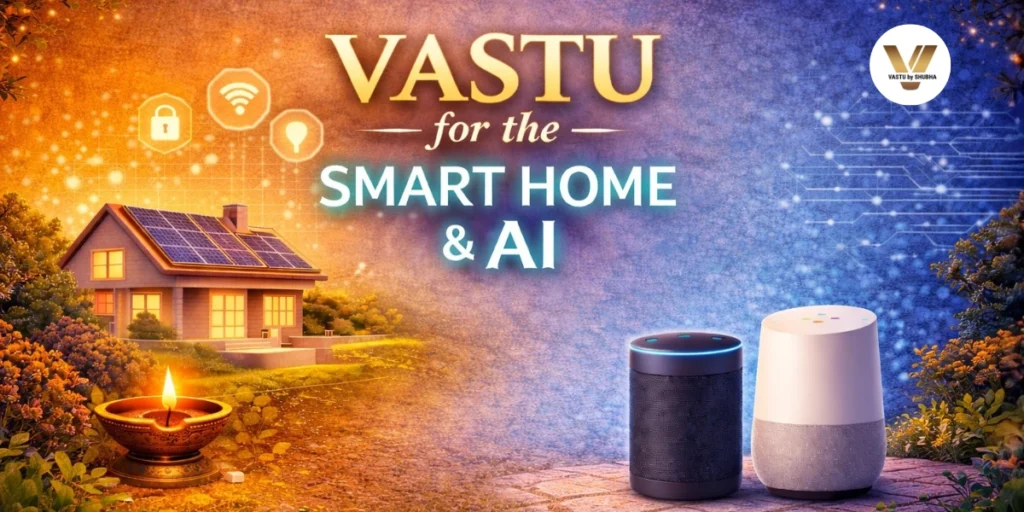
Indian homes are evolving rapidly. From voice assistants to app-controlled lighting, smart living is no longer a future concept but a present reality. At the same time, the cultural trust in Vastu Shastra continues to remain strong in Indian households.
A smart home is a living space where technology automates daily tasks and improves convenience. However, comfort alone is not enough. According to traditional Vastu principles, the flow of energy inside a home plays a crucial role in mental peace, stability, and overall well-being.
Today, homeowners are not choosing between technology and tradition. They are looking for a balanced approach where Vastu Shastra for modern homes works harmoniously with smart home technology. This is why the idea of smart home Vastu in India is gaining attention among families, apartment residents, and tech-driven homeowners alike.
What Is a Smart Home and AI Living in India?
A smart home is a house where devices and systems can be controlled automatically through mobile apps, sensors, or voice commands. These systems are connected through the internet and designed to make daily life more convenient, secure, and energy-efficient.
Artificial Intelligence, or AI, adds intelligence to this setup. It studies your daily habits, understands your preferences, and gradually adjusts lighting, temperature, security, and appliances according to your routine. Over time, the home becomes more responsive and personalized.
Common AI-powered devices used in Indian households include:
- Smart speakers like Alexa or Google Home
- Smart TVs and lighting systems
- AI-powered security cameras
- Smart kitchen appliances
- App-controlled ACs and fans
Urban lifestyles, work-from-home culture, and the demand for comfort are driving the growth of AI smart homes in India. With improved internet connectivity and growing awareness, smart home technology is becoming common not only in luxury houses but also in modern apartments.
Why Vastu Is Still Important for Smart Homes
Vastu is not about superstition. It is about maintaining balance in the energy of a living space. Every activity in a home, whether sleeping, working, cooking, or thinking, happens within an invisible flow of energy influenced by directions and elements.
In smart homes, the number of electronic devices increases significantly. Electronics generate electrical activity and amplify the energy of the direction in which they are placed. If too many devices are concentrated in one area, especially in sensitive zones like bedrooms or the center of the house, it may create restlessness or imbalance.
For example, placing heavy electronics near the sleeping area or cluttering one direction with multiple gadgets can disturb calmness and focus. This is why Vastu compliance for smart homes becomes important. The goal is not to remove technology but to position it thoughtfully so that comfort and harmony can coexist.
The importance of Vastu in modern homes lies in preserving stability, mental clarity, and emotional peace while adapting to technological advancements.
Can Vastu and Smart Home Technology Work Together?
Many people assume that technology and Vastu Shastra are opposites. This belief often comes from the idea that modern devices disturb natural energy. However, this is not entirely true.
Vastu does not reject progress. It focuses on balance and proper placement. When smart devices are installed according to directional principles and element alignment, they do not disturb energy. In fact, thoughtful automation can support daily routines in a structured and harmonious way.
For example, placing networking devices in suitable directions, avoiding electronic overload in rest zones, and aligning lighting with natural daylight patterns are simple ways to integrate smart home technology with Vastu principles.
The key lies in conscious planning. Vastu and smart home integration are practical and achievable when design decisions are made with awareness. A well-planned smart home can remain technologically advanced while still being Vastu-friendly and energetically balanced.
Core Vastu Directions and Elements for Smart Homes
Vastu Shastra is based on five fundamental elements: Earth, Water, Fire, Air, and Space. These elements exist in every home, regardless of how modern or technology-driven it becomes. Even smart homes operate within this natural energy framework.
Each direction in a house is governed by a specific element and type of energy. When electronic devices are placed in a direction, they amplify the energy of that zone. This is why understanding directional balance becomes essential in tech-enabled homes.
Why directions matter for AI devices:
- Each direction controls a specific type of energy
- Electronics strengthen and activate the energy of that area
- Imbalance in one direction may create stress or restlessness
- Proper alignment promotes smoother energy flow
This forms the foundation of Vastu directions for smart homes and element-based vastu technology planning. Once this directional logic is understood, placing smart devices becomes a matter of awareness rather than confusion.
Importance of North-East, South-East, South-West, and North-West in Tech Homes
Once the role of elements is understood, the next step is identifying how major directions influence energy in a smart home. Each of these four primary directions plays a distinct role in maintaining balance, especially when electronic devices are involved.
Below is a simplified directional guide for tech-enabled homes:
| Direction | Energy Role | Importance in Smart Homes |
|---|---|---|
| North-East | Clarity and intelligence | Best kept light and open. Suitable for study areas and minimal electronics. Avoid heavy gadgets here. |
| South-East | Fire and electrical energy | Ideal zone for electrical appliances, routers, and kitchen-related smart devices. |
| South-West | Stability and grounding | Suitable for heavy furniture, storage units, and structured automation hubs. Avoid constant movement devices. |
| North-West | Movement and communication | Good for networking devices, speakers, and airflow-related technology. |
In smart homes, electronics naturally activate and strengthen the energy of their placement zone. If aligned correctly with these directional principles, devices can function efficiently without disturbing overall balance. This understanding helps avoid unnecessary confusion while applying vastu directions for electronics in modern living spaces.
Vastu Guidelines for Smart Home Planning
Planning a smart home according to Vastu is far easier than correcting imbalances later. Once wiring, automation hubs, and device clusters are fixed in place, shifting them can become complicated. This is why directional awareness should begin at the design stage itself.
Key guidelines to follow:
1. Avoid clustering too many devices in one direction:
Concentrating routers, televisions, speakers, and appliances in a single zone may overload that area energetically. Distribute devices according to directional suitability.
2. Manage wiring neatly to prevent energy blockage:
Exposed and tangled wires create visual clutter and symbolic energy obstruction. Organized wiring supports smoother flow and better aesthetics.
3. Keep central areas light and open
The center of the house represents balance. Avoid placing heavy automation systems or large electronic units here.
4. Align device placement with room purpose
Bedrooms require calm energy, kitchens need controlled fire energy, and workspaces demand focus-oriented directions.
Following these practical Vastu tips for smart homes ensures that technology enhances comfort without disturbing harmony. Thoughtful planning creates a balanced environment where automation and energy flow work together naturally.
Vastu for Smart Home Entrance and Main Door
The main entrance is considered the gateway of energy in Vastu Shastra. Whatever enters through this space influences the overall atmosphere of the home. In smart homes, this area often includes digital doorbells, security cameras, and smart locks, making correct placement even more important.
Key considerations for a Vastu-aligned smart entrance:
- Prefer north, east, or north-east facing entrances: These directions are associated with positive and uplifting energy flow.
- Install smart locks and doorbells neatly: Avoid excessive wiring or bulky devices around the door frame. Keep the entrance visually clean and balanced.
- Do not overload the entrance with heavy electronics: Security devices are acceptable, but avoid cluttering the doorway with additional gadgets or control panels.
- Maintain good lighting: Soft, well-positioned lighting enhances positivity and supports a welcoming atmosphere.
A well-planned entrance ensures that technology strengthens security while preserving the natural energy flow of the home. When the entry zone is balanced, the entire smart home functions more harmoniously.
Vastu for AI-Controlled Living Room
The living room is one of the most active spaces in a home. It is where conversations happen, guests are welcomed, and family members spend time together. In smart homes, this area often includes televisions, smart speakers, automated lighting, and entertainment systems, making directional placement important.
Key Vastu guidelines for a smart living room:
- Place the television in the south-east or north-west zone: South-east supports electrical energy, while north-west supports movement and communication. These zones are generally suitable for entertainment electronics.
- Position smart speakers carefully: Voice assistants can be placed in the north-west to support communication flow. Avoid placing them too close to rest areas.
- Use balanced smart lighting: Lighting should not be excessively bright or harsh. Soft and adjustable lighting helps maintain comfort and prevents energetic overstimulation.
- Avoid electronic overload in one corner: Stacking multiple gadgets in a single direction may create imbalance. Spread devices according to suitability.
When thoughtfully arranged, an AI-controlled living room can remain vibrant and technologically advanced while still maintaining energetic harmony and comfort.
Vastu for Smart Kitchen and AI Appliances
The kitchen represents the fire element in Vastu Shastra. It is a space associated with nourishment, health, and energy. In modern homes, the kitchen often includes smart refrigerators, microwaves, induction cooktops, automated chimneys, and app-controlled appliances. Proper placement ensures that technology supports, rather than disturbs, the fire energy.
Key Vastu guidelines for a smart kitchen:
- Prefer the south-east direction for the kitchen: The south-east is governed by the fire element and is traditionally considered ideal for cooking activities and electrical appliances.
- Place major appliances thoughtfully: Microwaves, induction stoves, and other heat-generating devices should align with the fire zone. Avoid clustering too many heavy appliances in non-fire directions.
- Maintain separation between fire and water: Keep the sink and water-related elements away from the stove and major electrical appliances. This helps maintain elemental balance.
- Avoid excessive gadget buildup: While smart appliances add convenience, too many devices in limited space may create visual and energetic clutter.
Following proper Kitchen Vastu principles helps preserve the strength of the fire element while allowing automation and modern convenience to function smoothly.
Vastu for Smart Bedrooms and Sleep Technology
Bedrooms are meant for rest, recovery, and mental calmness. According to Vastu principles, this space should carry stable and soothing energy. In smart homes, however, bedrooms may include smart lighting, automated curtains, voice assistants, televisions, and climate control systems. Without proper planning, excessive electronic activity can disturb the calm atmosphere.
Key Vastu considerations for smart bedrooms:
- Avoid placing electronic devices near the headboard: Heavy gadgets close to the sleeping area may create restlessness. Keep devices at a reasonable distance from the bed.
- Limit unnecessary automation during sleep hours: Night-time notifications, bright lighting changes, or sudden sounds can interrupt the natural rest cycle. Use soft and controlled automation settings.
- Prefer south or south-west for bed placement: These directions are associated with stability and grounding energy.
- Use gentle smart lighting: Warm, dim lighting supports relaxation better than harsh or bright tones.
A thoughtfully designed smart bedroom maintains technological comfort while protecting the calm and restorative energy required for quality rest.
Vastu for Smart Home Office and AI Workspaces
With the rise of remote work and digital businesses, home offices have become essential in many Indian households. This space directly influences concentration, decision-making, and productivity. In smart homes, workspaces often include laptops, Wi-Fi routers, automation panels, and AI tools that operate throughout the day.
Key Vastu guidelines for a smart home office:
- Prefer north or east-facing work direction: Sitting while facing north or east is traditionally associated with clarity, growth, and positive thinking.
- Keep heavy electronics organized: Laptops, routers, and automation devices should be neatly arranged to avoid cluttered energy.
- Avoid placing the workstation in the bedroom if possible: Mixing work energy with rest zones may reduce mental separation between productivity and relaxation.
- Ensure proper lighting and ventilation: Natural light from the east and balanced airflow support focus and reduce mental fatigue.
A Vastu-aligned AI workspace creates a stable and focused environment where technology supports efficiency without creating unnecessary stress or imbalance.
Ideal Direction for AI and Smart Devices as per Vastu
Electronic devices carry active and dynamic energy because they operate through electricity and constant connectivity. In Vastu Shastra, electricity is closely linked with the fire element. When placed correctly, these devices can function efficiently without disturbing the natural energy flow of the home.
Direction-based placement is important because each zone of a house governs a specific type of energy. Aligning smart devices with suitable directions helps maintain balance while allowing automation to work smoothly.
General principles to remember:
- Electrical and heat-generating devices perform well in fire-supporting zones
- Communication devices should align with movement-oriented directions
- Heavy automation units should be placed in stable zones
- Avoid placing major electronic hubs in the center of the house
Understanding these broad guidelines makes it easier to decide where individual devices such as smart speakers, routers, and security systems should be installed.
Best Vastu Direction for Smart Speakers and Voice Assistants
Smart speakers and voice assistants are primarily communication devices. They respond to commands, relay information, and often remain active throughout the day. In Vastu, communication and movement-related energy are associated with the north-west direction.
Key placement guidelines:
- Place smart speakers in the north-west zone: This direction supports movement and communication flow, making it suitable for voice-based devices.
- Keep them in common areas: Living rooms or family spaces are more appropriate than private rest zones
- Avoid bedrooms and puja rooms: Bedrooms require calm and stable energy, while puja areas should remain spiritually focused without technological disturbance.
- Maintain moderate sound levels: Excessive volume or constant activation may create restlessness.
When positioned thoughtfully, voice assistants can function efficiently without disturbing the energetic balance of the home.
Vastu Placement for WiFi Routers and Automation Hubs
WiFi routers and automation hubs act as the central connectivity system of a smart home. They operate continuously and emit strong electrical and signal energy. In Vastu principles, such active electrical energy is generally linked to the fire element.
Key placement guidelines:
- Prefer the south-east direction for routers: South-east represents the fire element and is considered suitable for electrical equipment and connectivity devices.
- North-west can be a secondary option: Since networking involves communication and movement of signals, north-west may also support router placement if south-east is not practical.
- Avoid the center of the house: The central zone represents balance and stability. Placing a strong electronic hub here may disturb overall harmony.
- Keep routers slightly elevated and organized: Avoid placing them directly on the floor or inside cluttered cabinets. Proper ventilation and neat wiring support both functionality and energy flow.
When placed in the correct direction, routers and automation hubs can function effectively while maintaining Vastu balance in the home.
Vastu Tips for Security Cameras and Smart Doorbells
Security cameras and smart doorbells are designed to monitor and protect the home. In Vastu, protection and vigilance are associated with active yet controlled directional energy. These devices should be positioned in a way that supports safety without creating unnecessary psychological discomfort.
Key placement guidelines:
- Install cameras facing north or east where possible: These directions are considered positive and help maintain clarity and alertness.
- Position doorbells near the main entrance without clutter: Keep wiring neat and avoid overcrowding the entrance with multiple gadgets.
- Avoid direct camera focus inside bedrooms: Bedrooms represent privacy and calm energy. Continuous monitoring in this zone may disturb the sense of relaxation.
- Ensure devices are stable and firmly mounted: Loose or improperly fixed equipment may symbolically represent instability.
When placed thoughtfully, security devices enhance protection while maintaining the energetic comfort of the home.
EMF Radiation in Smart Homes and Vastu Remedies
In smart homes, multiple devices such as routers, mobile phones, smart televisions, and automation hubs operate continuously. These devices emit electromagnetic fields, commonly referred to as EMF. While modern technology is a part of daily life, many homeowners prefer to maintain awareness about energy exposure within their living space.
From a Vastu perspective, the concern is not medical diagnosis but energetic balance. Excessive electronic concentration in one area may create an environment that feels heavy or overstimulating. This is why mindful placement and moderation become important in tech-driven homes.
Instead of eliminating technology, Vastu encourages thoughtful arrangement and supportive remedies that help maintain harmony. Understanding this balance allows families to enjoy smart living while remaining conscious of their surroundings.
Simple Vastu Remedies to Reduce EMF Effects at Home
Vastu does not suggest removing modern devices. Instead, it recommends simple balancing techniques that support a healthier energetic environment. These remedies are easy to implement and suitable for tech-enabled homes.
Practical Vastu remedies include:
- Use natural plants in living spaces: Indoor plants help maintain freshness and visual calmness. They also soften the presence of multiple electronic devices.
- Switch off devices when not in use: Turning off routers, televisions, or automation systems during sleep hours reduces unnecessary activity and promotes calmer surroundings.
- Use copper or earthen decor elements: Copper items and natural materials are traditionally associated with grounding energy. Decorative pieces made of clay, brass, or copper can subtly enhance balance.
- Avoid placing too many devices in one room: Distributing electronics thoughtfully across different zones reduces energetic concentration in a single area.
These simple vastu remedies for electronics allow homeowners to enjoy smart home comfort while maintaining balance and moderation in their environment.
Smart Automation and AI Routines Aligned with Vastu
Smart homes are not only about device placement. Automation routines also influence the overall atmosphere of a house. When daily schedules align with natural energy cycles, technology can actually support Vastu principles.
Vastu emphasizes harmony with sunlight, direction, and time of day. AI systems can be programmed to reflect these natural patterns. For example:
- Automated curtains can open toward the east in the morning to allow natural sunlight.
- Lighting intensity can gradually increase during early hours to promote alertness.
- Evening lighting can shift to warmer tones to encourage calmness.
- Notifications and sound alerts can be reduced during rest hours.
Such small adjustments help maintain a balanced rhythm in the home. Instead of creating disturbance, automation becomes a supportive tool that enhances daily comfort while respecting directional energy.
When thoughtfully programmed, AI routines can strengthen the connection between technology and traditional Vastu wisdom.
Morning and Night Automation as per Vastu Directions
Time of day plays an important role in Vastu principles. Morning hours are associated with freshness and clarity, while evening and night hours represent calmness and stability. Smart automation can be programmed to reflect this natural energy cycle.
Morning automation suggestions:
- Allow natural light from the east to enter by opening curtains automatically.
- Gradually increase indoor lighting rather than switching to harsh brightness.
- Activate soft background music or gentle alerts to support a positive start.
Night automation suggestions:
- Shift lighting to warm and dim tones in west or south zones.
- Reduce screen brightness and limit unnecessary notifications.
- Turn off non-essential devices during sleeping hours.
These small adjustments align daily routines with directional energy flow. When morning and night settings follow Vastu awareness, the home environment feels more structured and balanced.
Common Vastu Mistakes in Smart Homes to Avoid
While integrating technology into modern homes, certain common mistakes can unintentionally disturb energetic balance. Being aware of these issues helps prevent long-term imbalance.
Common mistakes include:
- Overloading one direction with multiple devices: Placing routers, televisions, speakers, and appliances in the same zone can amplify that direction excessively.
- Installing major electronic hubs in the center of the house: The central area represents stability. Heavy or constantly active devices here may disturb balance.
- Placing gadgets inside bedrooms or near the headboard: Excessive electronic activity in rest zones may reduce calmness.
- Ignoring wiring clutter: Tangled cables and exposed wiring create both visual and symbolic disorder.
- Installing devices inside puja areas: Sacred spaces should remain spiritually focused and free from technological interference.
Avoiding these smart home Vastu mistakes allows technology to function smoothly while preserving harmony in the living environment.
Benefits of a Vastu Compliant Smart Home with AI
When technology and Vastu principles are aligned, the home environment feels more structured and comfortable. The goal is not perfection but balance.
Key benefits include:
- Improved mental calmness
Thoughtful device placement reduces unnecessary stimulation and creates a more peaceful atmosphere. - Better focus and productivity
Directional alignment in workspaces and living areas supports clarity and concentration. - Enhanced sense of stability
Proper distribution of electronic energy prevents overload in sensitive zones such as bedrooms and central areas. - Organized and clutter-free living
Vastu planning naturally encourages neat wiring, structured layouts, and mindful use of devices. - Long-term harmony
When automation routines follow natural energy cycles, daily life feels more balanced and less chaotic.
These benefits of a Vastu-compliant smart home are practical and experience-based. By applying simple awareness, homeowners can enjoy modern comfort without compromising energetic harmony.
Who Should Follow Vastu for Smart Homes in India?
Vastu for homes is not limited to a particular group. It is suitable for anyone who wants to combine modern comfort with energetic balance.
It is especially helpful for:
- New home buyers
Planning from the construction stage makes it easier to align smart devices with directional principles. - Apartment residents
In compact urban apartments, device concentration can increase quickly. Proper placement helps maintain balance even in limited spaces. - Tech-driven families
Homes with multiple routers, screens, automation hubs, and smart appliances benefit from structured device distribution. - Work-from-home professionals
When productivity depends on digital tools, directional alignment can support better focus and mental clarity.
Vastu principles are flexible and can be applied gradually. Even small adjustments in device placement and automation routines can improve overall harmony in a smart home.
Expert Vastu Tips for Future-Ready Smart Homes
Technology continues to evolve rapidly. Smart homes today may include voice assistants and automation hubs, but future homes may integrate even more advanced AI systems. Planning with flexibility ensures that Vastu alignment remains intact as technology upgrades over time.
Expert suggestions for future-ready smart homes:
- Plan device zones instead of fixed device points
Keep certain directions reserved for electrical and communication devices so future upgrades remain aligned. - Maintain flexibility in layout
Avoid permanently fixing heavy automation units in sensitive areas such as the center or north-east zone. - Upgrade thoughtfully
Before adding new smart systems, consider their directional suitability and purpose. - Balance convenience with moderation
Not every corner of the home needs automation. Choose areas where technology adds genuine value.
A future-ready smart home is not about adding more devices. It is about creating a structured environment where technology evolves without disturbing long-term energetic harmony.
Final Thoughts: Balancing Technology and Vastu Energy
Smart living does not require abandoning tradition. In fact, when understood correctly, technology and Vastu Shastra can complement each other beautifully. Smart devices are tools designed to enhance comfort, security, and efficiency. Vastu principles provide the structure that ensures these tools function within a balanced and harmonious environment.
A truly intelligent home is not defined by the number of devices it contains, but by how thoughtfully those devices are placed and used. When automation routines align with natural light cycles, when electronics are distributed according to directional energy, and when clutter is minimized, the home begins to feel calm, organized, and stable. By combining modern innovation with time-tested Vastu wisdom, homeowners can create a space that feels both future-ready and energetically balanced.